
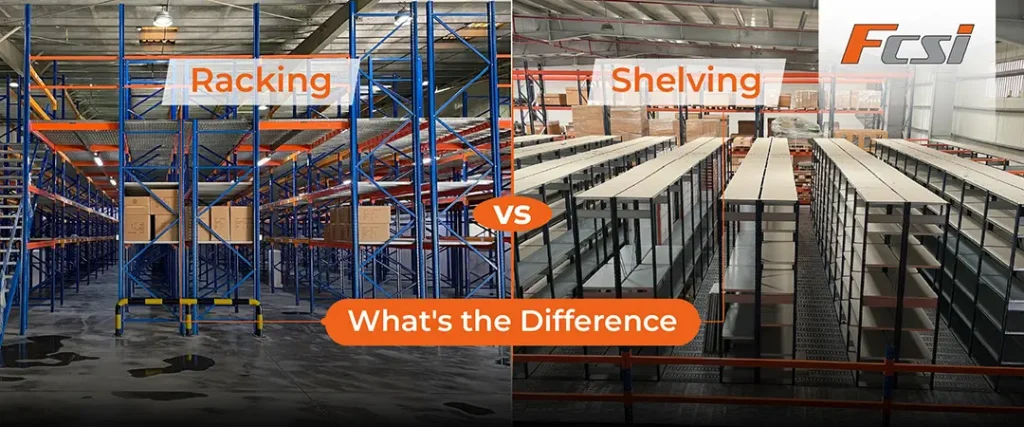
When people plan a warehouse, one question comes up quite often: should we use racking or shelving? Both are made for storage, but they are not used in the same way. Pallets, bulky items and heavier stock are normally stored on racking. Shelving is better for cartons, tools, spare parts, files and smaller products that workers pick by hand. Racking Versus Shelving: What’s the Difference helps you find a setup that matches the products you store, how your team works and the space you have.
Racking vs Shelving: What’s the Difference in Daily Warehouse Use?
The easiest way to understand the difference is to look at how goods are stored and picked.
Racking is generally used when stock is heavy, palletized or moved by forklifts. Shelving is generally used when employees can manually access and pick products.
Both of these may be needed in a busy warehouse. Pallets can remain on the warehouse racking system, and smaller cartons and frequently picked items can be placed on shelving close by.
It also depends upon aisle width, product weight, stock movement, picking frequency and type of material handling equipment in use.
What Is Warehouse Racking?
Warehouse racking is built for heavier loads and larger quantities of stock. Upright frames and horizontal beams create several storage levels, which helps businesses use the height of a
warehouse instead of storing everything at floor level.
Racking is commonly used for:
- Palletised goods
- Bulk stock
- Heavy cartons
- Raw materials
- Finished products
- Fast-moving warehouse stock
A properly planned warehouse storage layout can keep pallets off the floor and make stock easier to locate.
Selective Pallet Racking
Selective pallet racking is one of the most common systems used in warehouses. Each pallet has its own position, so forklift operators can reach the required pallet without moving several others first.
This system is helpful when a warehouse has many product lines and workers need direct access to different SKUs.
Selective racks can also make it easier for businesses with frequent stock changes to manage warehouse inventory, as each pallet location can be easily marked and tracked.
Drive-In Racking
Drive in racking works differently. Instead of keeping wide access in front of every pallet position, it creates deeper storage lanes.
Forklifts move into these lanes to place or remove pallets. This type of racking is often used where large quantities of the same product need to be stored in a smaller floor area.
It can be a practical choice for warehouses focusing on storage density instead of direct access to every individual pallet.
Other Racking Options
Different products need different storage arrangements. Depending on the stock, a warehouse may use:
- Pallet Racks
- Medium Duty Racks
- Multi Tier Racks
- Cantilever Racking
- Double Deep Pallet Rack
- Tyre Racking
- Carpet Storage Racks
For example, Cantilever Racking is useful for long items such as pipes, timber, metal sections, and similar materials. Tyre Racking is designed around tyre storage, while Multi Tier Racks make use of warehouse height by creating more than one storage level.
FCSI Racking provides a range of warehouse racking solutions for your business depending on your storage needs such as product size, load weight, access and space available.
What Is Shelving?
Shelving is usually easier to install than pallet racking and is often used for items that can be manually lifted and moved by workers.
Think about spare parts, cartons, office files, hardware, tools, retail stock, or smaller packaged products. These items usually do not need a forklift every time someone wants to pick them.
Common shelving options include:
- Long Span Shelving
- Slotted Angle Shelving
- Mobile Shelving
- Stainless Steel Shelving
- Bolt Free Racking
Long Span Shelving can work well for medium-size cartons and loose goods. Mobile shelving is often used when floor space is limited and users want more storage capacity in a smaller area.
Stainless Steel Shelving is ideal for situations where cleanliness and easy maintenance are priorities.
Racking and Shelving: Main Differences
There are a few practical differences that warehouse managers should look at before making a choice.
Weight of Goods
Racking is made for heavier loads, especially palletised products.
Shelving is better for lighter items that employees can place and remove by hand.
How Products Are Picked
With racking, workers often use forklifts, pallet trucks, or other material handling equipment.
With shelving, staff normally walk to the shelf and pick the required item directly.
Warehouse Height
Racking can make better use of high ceilings. Pallets can be stored at several levels, depending on the rack design and equipment being used.
Shelving can also go higher, but it is normally kept within practical picking height unless a multi-level system is installed.
Type of Stock
Racking suits pallets, bulk inventory, tyres, long materials, and heavy goods.
Shelving suits small boxes, components, files, tools, and hand-picked products.
Which One Should You Choose?
Start with your stock.
If most of your goods arrive on pallets and forklifts move them around the warehouse, racking is likely to play the bigger role. Selective pallet racking can suit warehouses with many SKUs, whilst drive in racking may suit businesses holding larger quantities of similar stock.
If your team mainly picks cartons, parts, or smaller items by hand, shelving may be enough.
Many warehouses use both.
For example, reserve pallets may stay on Pallet Racks, while smaller picking stock can be kept on Long Span Shelving. This keeps bulk stock separate from everyday picking and can make the warehouse easier to manage.
Why Storage Layout Matters
Buying racks or shelves is only one part of the job. The layout also needs to match the way people and equipment move through the warehouse.
Before choosing a system, check:
- Product size and weight
- Number of SKUs
- Pallet dimensions
- Forklift turning space
- Picking frequency
- Ceiling height
- Available floor area
- Future stock growth
A poorly planned warehouse may still feel crowded even when there is plenty of space. Wide empty areas, blocked aisles, or stock kept on the floor can all point to a layout problem.
FCSI Racking works with different storage systems including Rack Supported Mezzanine Floors, Structural Mezzanine Racks, Roll on Racks, Mesh Partitions, Pallet Support Bars, and Safety Barriers & Racking Solution, depending on the warehouse requirement.
Conclusion
Racking and shelving both have a place in warehouse storage, but they solve different problems. Racking is mainly used for heavier, palletised, or bulk goods. Shelving is better for smaller items that workers pick by hand.
The best setup will be determined by what you store, how often it moves and how your team accesses it. In many warehouses, it makes more sense to use both systems than to try to force every product into one kind of storage.
A mix of warehouse racking system, shelving, Pallet Racks, Long Span Shelving and other suitable storage options can make stock easier to find and give workers a clearer path thru the warehouse.
FAQs
1. What is the main difference between racking and shelving?
Racking usually stores heavy or palletised goods, while shelving is mainly used for smaller items picked by hand.
2. What is selective pallet racking used for?
Selective pallet racking is used when workers need direct access to individual pallets without moving other stock first.
3. Is drive in racking good for all warehouses?
No. Drive in racking is more suitable where high storage density is needed for similar palletised products.
4. Can I use racking and shelving in the same warehouse?
“Yes. Many warehouses hold bulk stock on pallet racking with shelving for smaller or high velocity products.
5. What type of shelving is good for cartons and spare parts?
Long Span Shelving and Medium Duty Racks are used for cartons, parts, tools and medium weight goods.
