
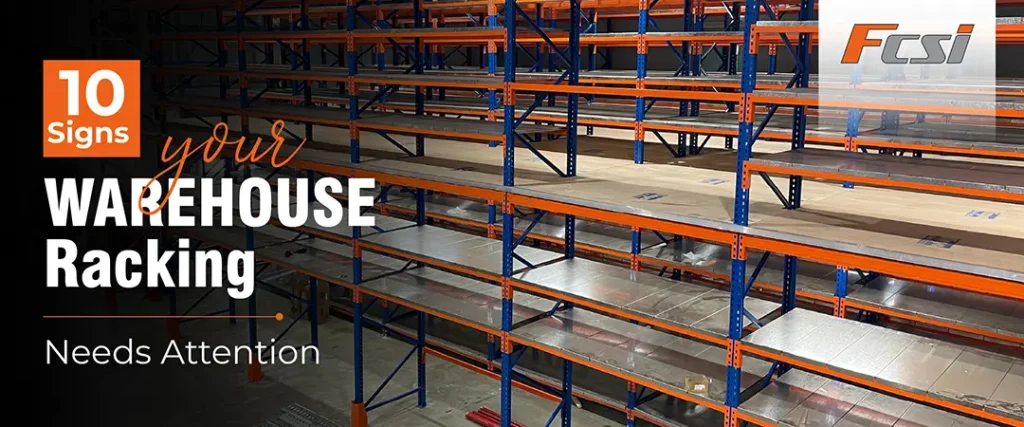
Warehouse racks take a lot of daily pressure. Stock goes in, stock comes out, forklifts move through the aisles, and different types of goods are placed on the same storage system over time. Due to this, small signs of damage may be easily overlooked.
A loose bolt, a rusty section, a crooked frame or an overloaded shelf may not appear to be an emergency. But if they are not contained, these problems can grow. Knowing the 10 Signs Your Warehouse Racking Needs Attention can help you spot problems early and keep your warehouse easier to manage.
10 Signs Your Warehouse Racking Needs Attention Before Damage Gets Worse
Every warehouse uses its storage space differently. Some use pallet racks, some use long span shelving, medium duty racks or other rack storage systems. Whatever you have, regular checks are important.
Here are the signs you should watch for.
1. Upright Frames Are Bent or Dented
The upright frame is one of the main parts of a rack. Forklift contact, pallet movement, or a hard knock can leave dents and bends.
Don’t dismiss a damaged upright just because the rack is still standing. Before you put any more weight on it, inspect the affected area.
This matters even more with Pallet Racks, where the frames carry heavy loads every day.
2. Beams Are Sagging or Sitting Unevenly
Rack beams should look straight and level. If one side starts dropping, twisting, or bending, something is wrong.
Too much weight is one possible reason. Another could be a damaged connector or poor pallet placement.
Warehouses using Double Deep Pallet Rack systems should also check the inner sections, not only the front row.
3. Bolts, Clips, or Connectors Are Loose
Small rack parts are easy to miss during a busy workday, but they still matter.
“Fix loose bolts, damaged locks, missing clips and shifted anchors before the problem gets worse.
A simple warehouse racking inspection should include these small parts, especially in areas where forklifts and pallet trucks move often.
4. The Rack Is Carrying More Weight Than It Should
Storage needs change. A shelf that once held light cartons may later be used for heavier stock.
That can put extra pressure on the frame if the rack was not made for that load.
Make sure staff know the load limit of the industrial storage equipment they use.
Some products may be better suited to Medium Duty Racks or Long Span Shelving rather than forcing heavy goods onto the wrong shelf.
5. Rust or Corrosion Is Starting to Show
Rust may begin as a small patch, but it should still be checked.
Moisture, humidity, cleaning chemicals, or poor storage conditions can affect metal racks over time.
Look around the bottom of the uprights, joints, beams, and shelves.
In areas where moisture is common, Stainless Steel Shelving may be more suitable for certain goods.
6. The Rack Has Started Leaning
A warehouse rack should stand straight.
If it starts leaning to one side, check the floor, anchors, loading pattern, and frame condition.
Do not assume moving a few boxes will solve the issue.
Warehousing for Business When designing a storage layout, Dubai setups need to consider factors like floor condition, rack height, stock weight and forklift movement.
7. Forklifts Keep Hitting the Same Rack
Forklift marks around the bottom of the rack are a warning sign.
Look for chipped paint, dents, scratches, and bent frame sections.
If the same area gets hit again and again, the aisle may be too tight or the turning space may be poor.
Safety Barriers & Racking Solution products can help protect exposed areas, but staff driving habits and aisle planning also need attention.
8. Your Current Racking Does Not Suit Your Stock Anymore
A warehouse rarely stores the same products forever.
You may start handling tyres, long items, rolled goods, spare parts, or heavier stock.
Instead of putting everything on one type of shelf, use the system that suits the product.
Some useful options include:
- Tyre Racking
- Carpet Storage Racks
- Cantilever Racking
- Slotted Angle Shelving
- Bolt Free Racking
- Roll on Racks
FCSI Racking offers different storage options for businesses with different stock types and warehouse layouts.
9. Your Warehouse Feels Full
Before searching for another warehouse for rent, check whether your current building has unused height.
Many warehouses run out of floor space but still have plenty of room above the racks.
Multi Tier Racks can help use that height. Rack Supported Mezzanine Floors and Structural Mezzanine Floor systems can also add useful storage levels.
For some layouts, Mobile Shelving can help reduce wasted aisle space.
Even simple garage shelving ideas can work well in small stockrooms, workshops, and maintenance areas where wall space is not being used properly.
10. Nobody Remembers the Last Rack Check
If nobody knows when the racks were last checked, that is a sign by itself.
Warehouse teams should keep an eye on the racks during normal work.
Check for:
- Bent uprights
- Loose bolts
- Missing clips
- Rust
- Damaged beams
- Leaning frames
- Forklift marks
- Overloaded shelves
Parts such as Pallet Support Bars and G.I. Wire Mesh Decking should also be checked if they are part of the rack setup.
Choosing the Right Storage System for Your Warehouse
Not every rack works for every type of stock.
A warehouse storing pallets may need Drive-In Racking, Pallet Racks, or Double Deep Pallet Rack systems. Long goods may fit better on Cantilever Racking. Long Span Shelving or Slotted Angle Shelving may be more appropriate for smaller items.
If floor space is short, Multi Tier Racks or Rack Supported Mezzanine Floors may be worth considering.
Other warehouse products such as Warehouse Staircases, Cargo Lift, Mesh Partitions, Metal Cages, Stackable Storage Box, and G-I Drop Over Panels can also help organise different areas of the warehouse.
The right choice depends on the size of the goods, weight, available height, forklift access, and how often stock moves in and out.
Why Regular Rack Checks Matter
Most rack problems do not start as major damage.
They usually begin with something small: a dent, a loose part, a rusty patch, or a shelf carrying too much weight.
Regular checks make these issues easier to notice.
FCSI Racking works with companies seeking warehouse racking and shelving for a variety of storage needs. Proper rack setup and regular checks can make warehouse work easier on a daily basis.
Conclusion
Warehouse racks should not be left unchecked for years.
Bent frames, damaged beams, parts that are loose, rust, overloading or forklift impact, something has to be done.
Your storage needs may also change as the business grows.
Check the racks often, use the right system for the stock, and deal with small problems before they become bigger ones.
Frequently Asked Questions
How often should warehouse racking be checked?
Carry out regular visual checks and inspect the racks after any forklift impact or visible damage.
How do you know your rack is damaged?
Common signs include bent frames, sagging beams, rust, loose bolts, missing clips and leaning sections.
Can I keep using a bent rack?
Do not keep loading it without checking the damaged area first.
Which racking system should I choose?
Choose based on stock size, weight, available height, forklift access, and how often goods move.
How can I increase my warehouse storage space?
You can look at Multi Tier Racks, Drive-In Racking, mezzanine floors, or a better shelf layout before moving to a larger warehouse.
